The Homies AI Manifesto
Better at the job.
We are not here to disrupt agents. We are here to upgrade them—power tools for the biggest transaction of people’s lives.
For two decades, innovation in real estate has been aimed at one thing: proving the model is disruptible through fee compression. Cut the commission, cut out the agent, cut the cost of the transaction.
It has not worked. Not for consumers, anyway.
Every discount model that has come to market has paid for its pricing somewhere else. Lower service. Hidden conditions. A guaranteed sale below market value. An obligation to sell your next home through the same company. The consumer thinks they are escaping the pressured sales system that made them distrust the industry in the first place. Instead, they end up inside a different version of it. Same tactics, new wrapper, thinner representation on the largest transaction of their life.
And here is the question the disruptors never answer. If realtors are so overpaid, why have low-cost models not taken over the market? Markets make themselves. The theory that some cartelized structure was protecting the fee has been argued, litigated, and resolved in court, and the structure has barely moved. The market has already communicated its willingness to pay for real estate fees. Even a class action lawsuit did not change that. Consumers are not confused. They are telling us what they value.
The lesson is simple. The cost was never the root problem. The value was.
What we believe
We believe the real estate industry will be changed by technological advancement, not fee innovation.
We believe the way to enact real change is to make real estate professionals better at their jobs.
We believe you grow by delivering more to the customer, not less at a lower price.
We believe good tools should make an agent's job easier and make it harder to represent a client poorly.
We believe fee compression should be the result of better economics, not the marketing hook of a worse service.
And we believe artificial intelligence is the first technology in the history of this industry that can actually deliver on all of it. That is why we are going all in.
Nobody transformed farming by selling farmers a cheaper shovel
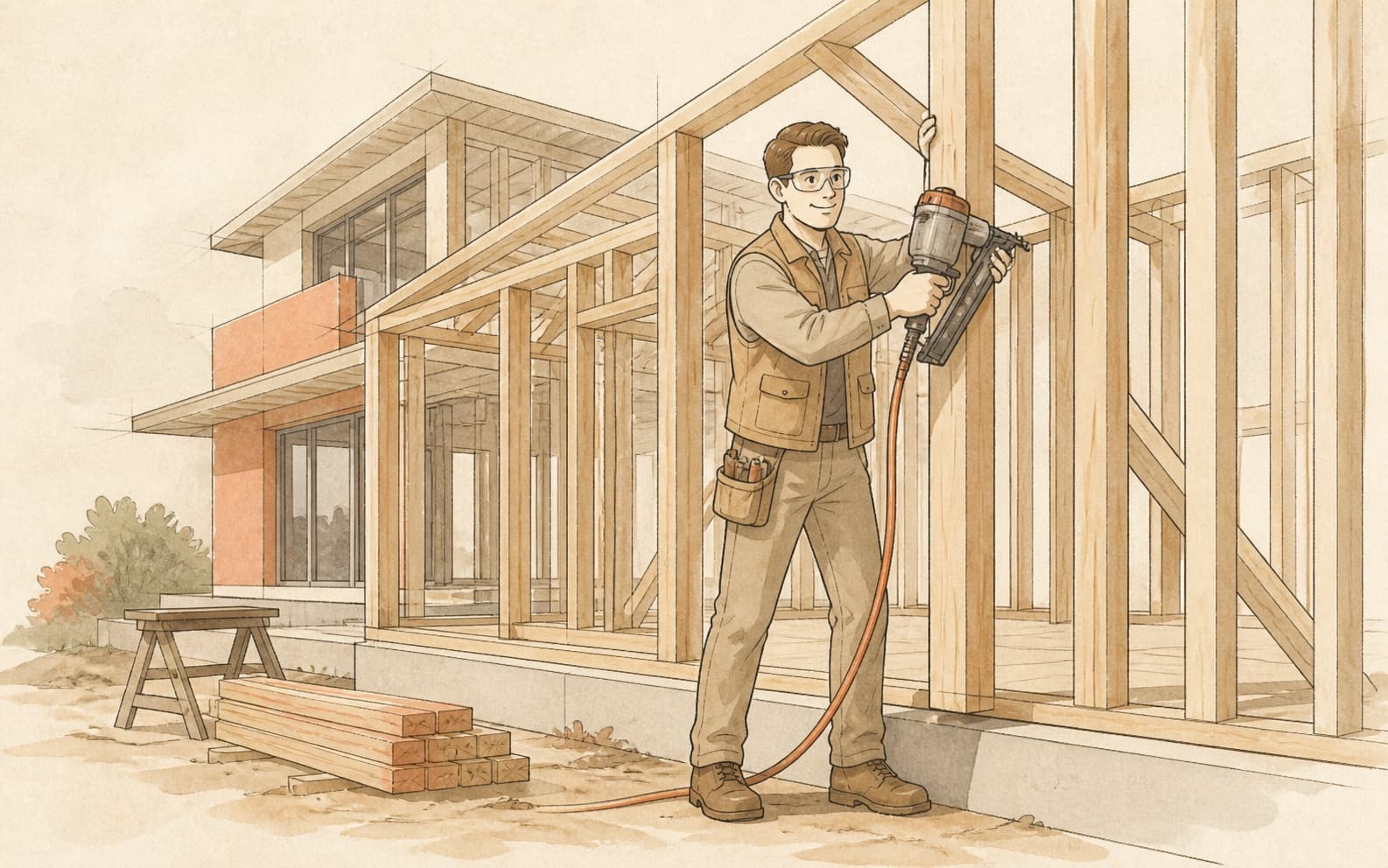
Power tools did not make construction materials cheaper. They made labour more productive, making the installation and assembly of those materials more efficient. A framer with a nail gun does not charge less per hour. They build more house per hour.
A hundred years ago, roughly 80 percent of humanity worked in agriculture. Today, most people do not even know someone who works in agriculture. Why? Because we innovated with the goal of increasing productivity, not just driving down cost. Farm equipment was expensive. It still is. Nobody transformed farming by selling farmers a cheaper shovel.

This is how we grow as a species. We become more productive. We deliver more service, not less service at a lower cost. We do not grow by trimming at the margins. We grow through improvement and efficiency layered on top of what already works, and on top of what the customer has clearly indicated they want.
And let us be honest about something else. This industry is not going anywhere, whether we like it or not. Real estate is one of the largest lobbying groups in the Western world and the largest decentralized salesforce in human history. You do not disrupt that out of existence. You make it better.
Consumers paint the whole industry with the same brush, and what they actually dislike are the bad apples. Here is what outsiders miss: nobody dislikes the bad apples more than the good apples do.
So return to the farm. How did agriculture end up with fewer bad apples? We innovated. We developed pesticides and better implements and improved harvesting. We did not imagine that bad apples would cease to exist because we stopped eating apples. We engineered a set of conditions that limits how often a bad apple can occur. That is exactly what this industry needs.
For much of history, innovation has proven to be deflationary. If we want things to change, we have to trust that.
Value first, then cost
You engineer value by giving more to the customer at the same price first, not less to the customer at a lower price. Aim for better first. Better service. Better outcomes. Then you can cost optimize, or let the market cost optimize for you.
That is the part the fee-first disruptors never understood. You have to give the market the means to cost optimize. You cannot tell the market it needs to cost optimize by handing it a cheapened version of the same product. The market does not want a cheaper, worse thing. It wants a better thing, and it will find the fair price on its own.
Here is how that plays out in practice. When you make a professional’s job significantly easier, they capitalize those savings into their pricing, because lower prices win more customers. That is not idealism. It is basic supply and demand.
And the conditions have never been more ready for it. Deals per agent in Canada and the US are sitting at some of the lowest levels in history. In a market this competitive, any agent who sees real improvement in their margins will use it to compete on price. Give the industry a genuine productivity gain and fee compression takes care of itself. The difference is that this time, it arrives without a reduction in the quality of service.
Consumers get lower fees and better representation. Agents get more clients and a business that scales. The industry gets the standardized, professional processes it should have had all along. Nobody has to lose for everyone to win.
Why we’re here
My vision has always been the same: help realtors be better at their jobs. Homies AI is the fullest expression of that vision.
I have spent my career betting on this thesis. Habistat was built to make the industry more transparent by putting real data science in the hands of real estate professionals, and it proved the point well enough that TRREB—the largest real estate board in the world—licensed it. I have lobbied for transparency at every level of government that would listen, and built a public platform on the same conviction: sunlight and standards make this industry better.
My co-founders arrived at the same conclusion from the other side of the table. They came into this industry because they were victims of it. They were poorly represented on their own transactions and watched preventable failures happen on the biggest purchase of their lives. And every one of those failures traced back to the same cause: the absence of proper systems and standardized processes that nearly every other professional industry takes for granted. Accountants have GAAP and audit standards. Engineers work to codes, stamped drawings, and formal review. Pilots use checklists and standard operating procedures. Medicine uses clinical protocols, documentation rules, and peer review. In each case, professional judgment sits inside a system designed to make the standard repeatable.
Real estate handles the largest transaction most people will ever make, and it runs with less process discipline than industries handling a fraction of the stakes. That contradiction is why Homies exists.
Computer-assisted real estate
Think about AutoCAD. Computer-assisted design did not replace engineers and architects. It made them dramatically more productive, and the entire built world got better because of it.
We are now at the forefront of computer-assisted everything. And computer-assisted real estate comes with a gorgeous acronym: CARE.
That is not just wordplay. Care is exactly what has been missing from the worst corners of this industry, and that absence is exactly what technology is now going to eliminate in short order.
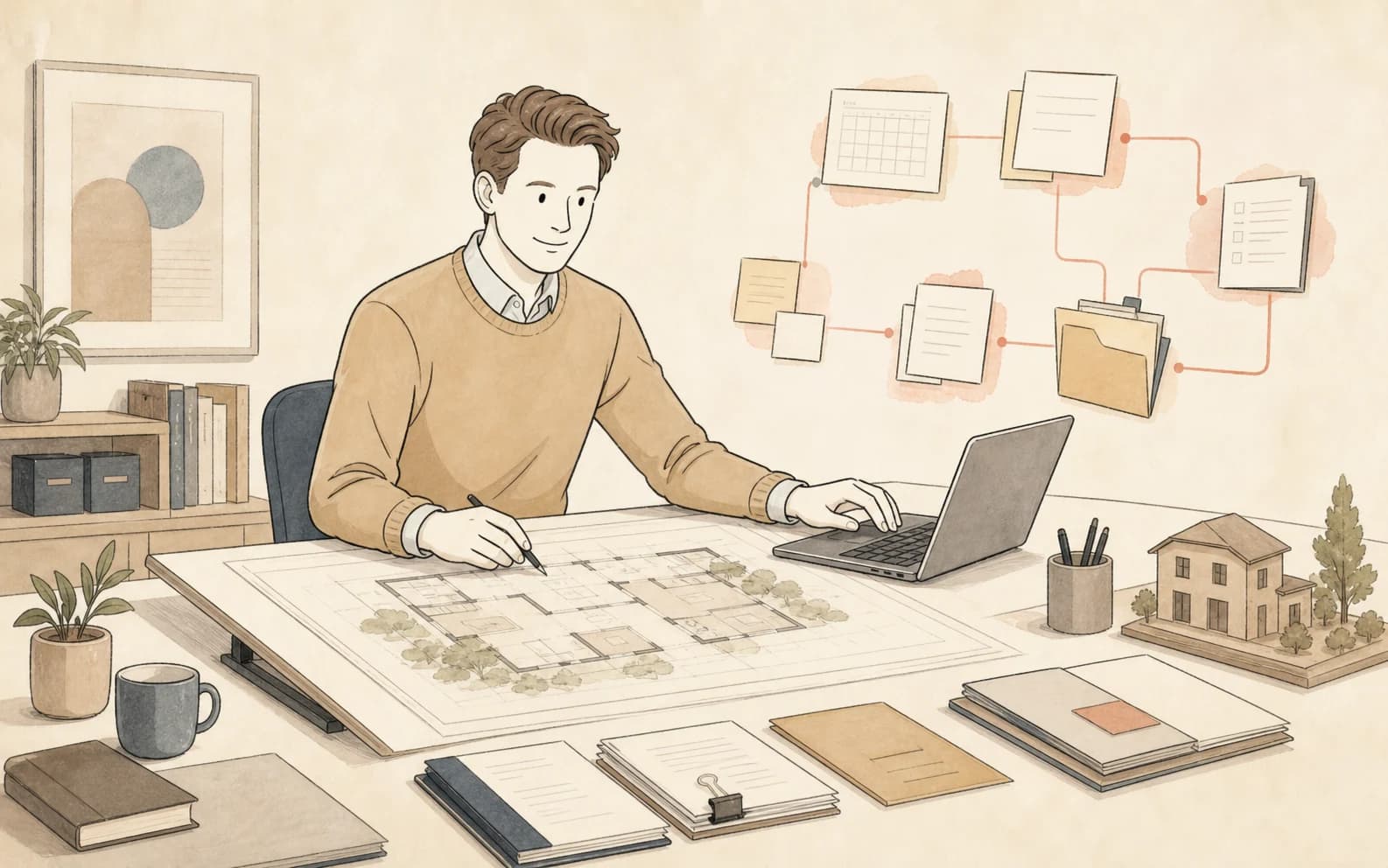
For the first time, software can do more than display listings and manage contacts. Agentic AI can execute real work. It can automate up to half of what an agent does today: the paperwork, the follow-ups, the data pulls, the coordination, the steps that get skipped when a human is stretched too thin.
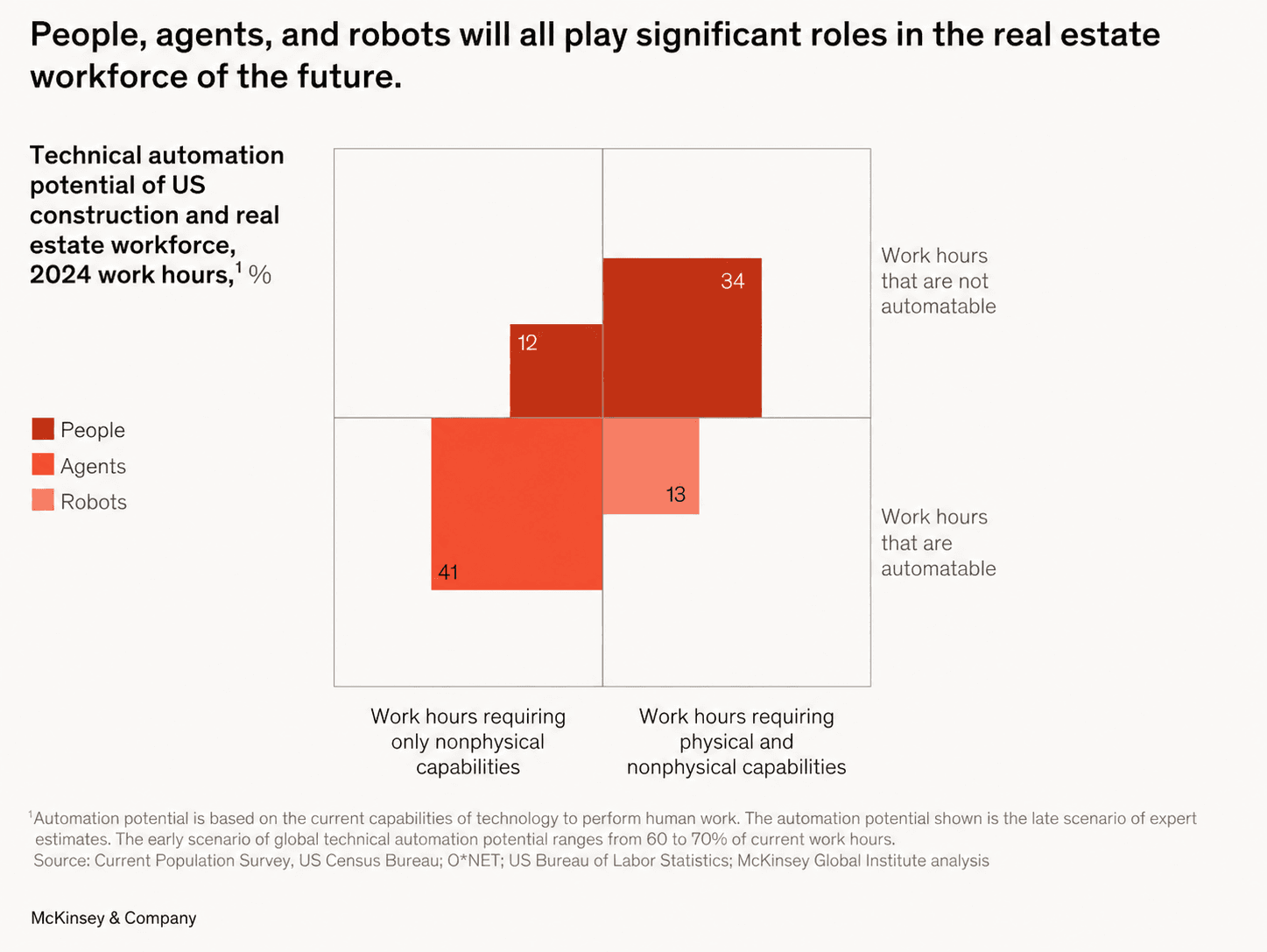
McKinsey’s exhibit combines construction and real estate; it does not isolate residential salespeople. Because a realtor’s automatable work is overwhelmingly nonphysical—communication, coordination, research, drafting, documentation, scheduling, and system updates—we estimate that software can execute roughly 40 to 50 percent of the current workload, while judgment, negotiation, advice, presence, and relationship remain human work.
If the same or better representation can be delivered with 40 percent less labour, a professional probably does not need to charge 100 percent of the old price to preserve the economics. The savings will not translate one-for-one into a fee cut—liability, expertise, and fixed costs remain—but they create room for lower prices, better service, and more client capacity at the same time.
That last part matters most. Most bad representation is not malice. It is capacity, uneven training, missing frameworks, weak supervision, fragmented tools, and the simple fact that many agents do not know what they do not know. Steps get dropped when people are drowning in them—or when nobody has made the right step explicit in the first place. When the system carries the process, the standard of care stops depending on how busy, experienced, organized, or well-supported the agent happens to be that week. Structure becomes the default. Cutting corners becomes the hard thing to do.
Real estate was due for this seismic change. It is happening now.
What we’re building
Homies is not a lead machine, and it is not a discount brokerage in disguise. It is an AI teammate for real estate professionals, built to carry the operational weight of the job so the agent can carry the judgment, the negotiation, and the relationship.
Every feature we ship gets tested against the same three questions.
- 01Does this make the agent’s job easier?
- 02Does this make it harder to represent a client poorly?
- 03Does this push the industry toward standardized, professional process?
If the answer is no, we do not build it.
Where this goes
We are not here to disrupt agents. We are here to upgrade them. Power tools for the biggest transaction of people’s lives.
The industry that comes out the other side looks different. More productive. More transparent. More standardized. More professional. Cheaper for consumers without being worse for them. An industry finally worthy of the size of the transaction it handles.
Change is coming to real estate. It will happen. But it will happen value first, not cost first. And we are building the tools that make it possible.
That is the change we signed up for. That is why this team exists. And that is what we are going all in to build.
Dan and the founding team
Homies AI · Toronto, Canada