Touching the Homies
Agentic AI finally showed up where normal people already live: the group chat. Meta Muse is interesting because it is not trying to win the room on X. It is trying to walk into the room where the Homies already are.
The unlock
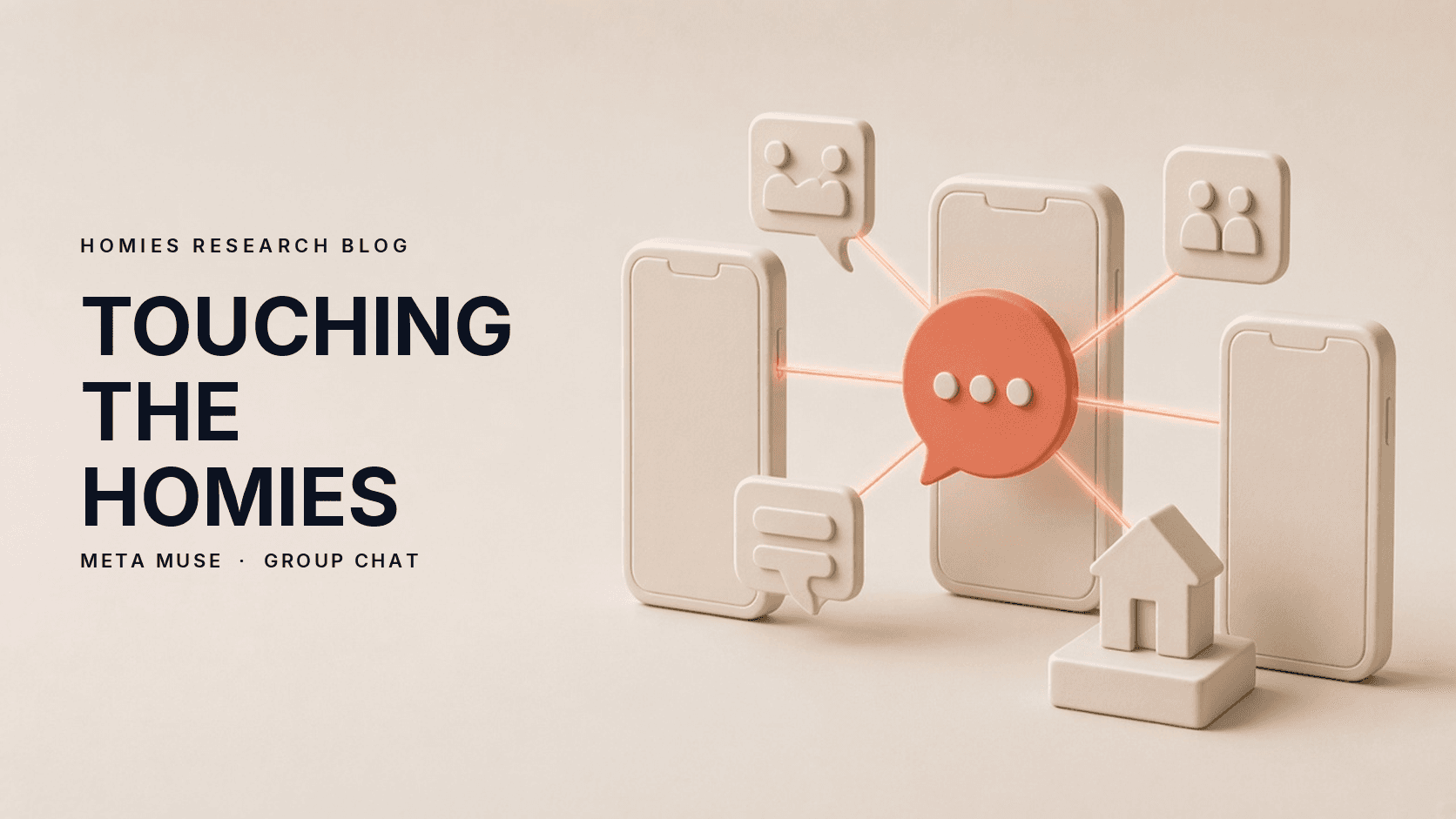
An agent that sits in the thread — that is what "touching the Homies" means
The ad machine
Better intent data is still the bigger prize for Meta and Google
Token sales
Metered outcomes could double the share of people who pay for AI
The last era
The community that cared hardest was already on X
For the last couple of years, agentic tools and AI harnesses have mostly belonged to people on the cutting edge of AI tech. OpenClaw went viral on Twitter. Grokbot capitalized on that energy. Hermes Agent was in the mix before that. The pattern was the same every time: the community that cared hardest was already on X, already technical, already comfortable spinning up tools that look like science projects to everyone else.
That is a real achievement. It is also a small room.
Meta Muse is interesting because it is not trying to win that room. It is trying to walk into the room where the Homies already are.
The wall nobody crossed
Monitoring ordinary text messaging was the gap
Nobody had really transcended the wall of monitoring ordinary text messaging. There were third-party WhatsApp plugins. Some of them worked. None of them were exceptional. Even OpenClaw had a version of that story, and it still was not a ten out of ten.
That gap suddenly makes Meta's caution make more sense. If you own WhatsApp, Facebook, Instagram, and Messenger, you do not ship a half-baked bridge into people's private conversations and call it done. You wait until the agent can sit in the thread, keep the group updated, and actually do work without becoming a liability.
Muse is the first serious attempt to put an agent into that surface as a first-party product: message it like a person, leave it in the chat, let it keep the sitting group chat warm while the rest of life continues.
What "touching the Homies" means
Not another demo for people who already follow agent Twitter. Distribution into the chats, pages, and groups where work and life already happen.
Real estate and small business
A huge amount of real business still runs on Meta's rails
Real estate professionals already market on Facebook. They run pages. They sit in groups. They get inbound from Marketplace, Instagram, and Messenger. Plenty of small businesses work the same way: the lead shows up in the place the customer already lives, not in a CRM the owner dreamed of using someday.
Until now, agentic AI mostly asked those people to leave that world and enter a chat box. Muse points the other direction. Take the operability of tools people already use, and plug an agent into that flow with as little friction as possible.
If Muse can sit in the group chat, watch the thread, update the Homies, and eventually take action across the apps around that conversation, that is a different product category than "ask ChatGPT a question." It is closer to a personal assistant or a small-business assistant that lives where the work already is.
Who's next on deck
The race is distribution, relationship, and trust
The obvious question is who follows.
Google should have done this, and still could. They have Android, Assistant, search, Workspace, and a smart-home stack. On pure surface area into the consumer's day, they may be the only company with more places to land an agent than Meta.
Apple could do this extremely well if they treat Siri less like a command line and more like a harness with permission, memory, and follow-through. They already have the device, the trust relationship, and the lock screen.
Amazon has Alexa, shopping, and streaming. That is a real wedge if the agent can buy, schedule, and manage the home without asking the user to open five apps.
The race is not only "who has the best model." It is who already has distribution, relationship, and trust — and who is willing to turn that into an agent people message instead of a chatbot people visit.
Meta just moved first on the consumer-friendly version of that bet.
The real money
The real money is still advertising
Meta and Google especially do not need AI to become their main business for this to matter. They already make a huge amount of money from advertising. The more targeted, specific, and personally tailored that advertising gets, the more those ads are worth.
An agent that sits in your chats, knows your goals, books your travel, follows up for your business, and watches what you actually do is not only a product. It is a data system. Every useful interaction is another signal that can enrich the profile of what someone wants, when they want it, and what they are about to buy.
So yes, they can make money selling AI usage — subscriptions, metered actions, a dollar or two at a time when something gets done. That loop is real. But for Meta and Google, the bigger prize is still how agentic AI amplifies the advertising machine they already run. Better intent data. Better personalization. Higher conversion. More revenue on the same distribution.
That is why this move is so natural for them, and why Apple and Amazon have different versions of the same game. Everyone with a trusted customer relationship wants a reason for that customer to keep talking, keep acting, and keep generating signal. An agent in the chat is one of the cleanest ways to do it.
How you sell tokens
This is also how you sell tokens
There is still a direct AI revenue story.
Big platforms already have the customer. Agentic assistants are a clean way to sell model usage into that relationship — not as a vague subscription for "AI access," but as a meter that charges when something actually gets done: book the thing, send the follow-up, update the group, move the lead.
If someone pays a dollar or two at a time to get a real result, and the result is good, they keep paying. That is a much stronger consumption loop than a glorified Google search sitting inside a chat window.
Right now, maybe three percent of people pay for AI. A delivery channel that lives in messaging, does work, and bills for outcomes could double that in a year or two — not because people suddenly become AI enthusiasts, but because the product stops asking them to change their behavior.
- Muse is an exceptional model push from Meta's side of the stack.
- Gemini has distribution advantages and, so far, less of that "this model is obviously special" feeling.
- Apple may not need the best model on day one if they can drop a useful harness into Siri.
- The winners may be the ones who make model calls happen because life got easier, not because a power user opened a new tab.
The frontier moved
The next era gets decided in group chats
The last era of agentic AI was won on Twitter, in Discord, and among people who already knew what a harness was.
The next era gets decided in group chats, Facebook pages, Marketplace DMs, and Instagram threads — the places Homies already work.
Meta Muse did not invent agentic AI. It did something rarer: it put an agent where ordinary people already talk, already sell, and already coordinate. That is the frontier.
Touching the Homies was the unlock.